How to Rebuild Your Identity After 50: A Women’s Guide
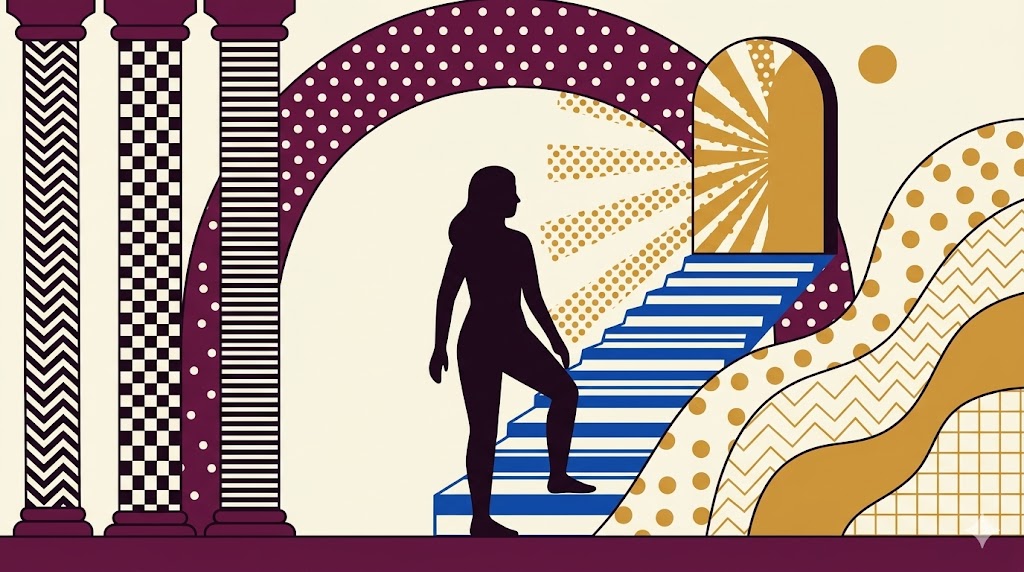
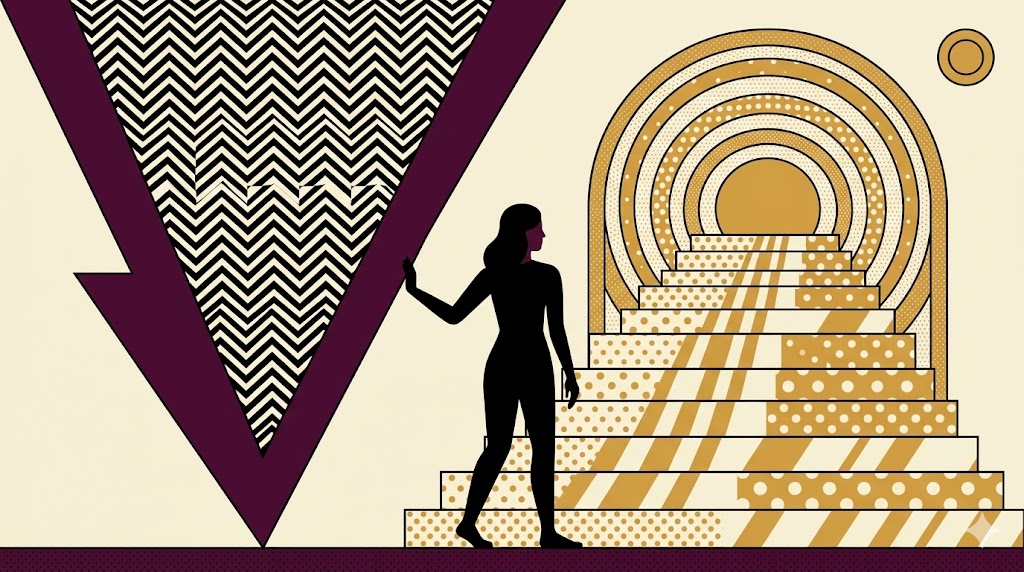
If you are wondering how to rebuild your identity after 50, you are not lost. You are finally ready to meet the woman you have been becoming all along. The version of yourself that built a career, raised a family, showed up for everyone, and checked every box no longer fits. And that is not a crisis. It is an invitation to begin again.
I remember sitting in my living room at fifty-two with everything I thought I wanted. A good marriage, a professional reputation, adult children who no longer needed me in the same way. And yet something underneath all of it was stirring, restless, refusing to be comforted by gratitude lists or another round of self-improvement. I kept waiting for the feeling to pass. But it did not pass. It grew stronger until I finally understood what it was asking. It was asking me to stop performing and start becoming.
Learning how to rebuild your identity after 50 is not about becoming someone new. It is about uncovering the woman who has been buried under decades of roles, expectations, and performance. Women who feel lost at midlife are not broken. They are responding to a natural developmental stage that asks them to shed what no longer belongs and reclaim what was always theirs. This guide is for any woman who looks in the mirror and wonders who she is when she is not being a mother, a partner, a caregiver, or a professional. She is ready to find out.
Why Identity Shifts at Midlife
There is a reason so many women reach their fifties and feel an inexplicable sense of displacement. For decades, your identity has been shaped by external roles. You were defined by your career title, by your relationship status, by the needs of your children, by the expectations of your community. These roles are not bad. They gave you meaning and structure. But the problem is that they are temporary. When the kids leave, when the career plateaus, when the marriage shifts, the scaffolding of your identity collapses because it was never built on you, it was built on what you did for others.
Psychologists call this the developmental phase of individuation. It is the process of separating who you actually are from who you learned to be. For women, this process often intensifies in midlife because the external demands that kept you in a certain shape begin to fall away. As I explored in my post on midlife crisis versus midlife awakening, what feels like a crisis is actually a natural part of growth. The discomfort you feel is your authentic self pushing through the surface of a life that was designed by someone else’s expectations.
The first step in learning how to rebuild your identity after 50 is understanding that you are not starting from scratch. You are excavating. Everything you need already exists inside you. You just have to create the conditions for it to emerge. This is not about fixing what is wrong with you. It is about clearing away what was never yours to carry. For more on how coaching supports this process, read my article on midlife coaching for women.
How to Start Rebuilding Your Identity After 50
The most common question I hear from women in my coaching practice is, where do I even start? The answer is always the same: start with what you already know. You do not need a grand vision or a five-year plan. You need a single honest conversation with yourself. What did you love before you were told what to love? What brought you alive before you learned to prioritize everyone else’s comfort? These questions are not sentimental. They are practical tools for reconnecting with the signal that has been buried under decades of noise.
I guide my clients through a process I call the return to self. It begins with a simple practice: twenty minutes of uninterrupted time each day with no agenda, no phone, no distraction. Just you and the quiet. In that space, the voice that has been trying to speak finally gets a turn. Some women write. Some walk. Some sit in silence. The medium does not matter. What matters is that you stop avoiding yourself long enough to hear what your own life is asking of you.
The next step is to identify the stories that have been running your life. I am not good enough. It is too late for me. I have already made my choices. These narratives feel like truth because you have been repeating them for decades. But they are not truth. They are inherited scripts that no longer apply. You can examine them, thank them for the protection they offered, and set them down. This is not easy work, but it is the most liberating work you will ever do. When you learn how to rebuild your identity after 50, you learn that the person you were afraid of becoming is actually the person you were meant to be.
What Identity Rebuilding Actually Looks Like Day to Day
There is a misconception that identity work is abstract and philosophical. In reality, it is deeply practical. It shows up in the small decisions you make every day. I had a client who realized she had been wearing neutral colors for twenty years because her mother told her bright colors were unprofessional. She bought a red blouse and wore it to a business meeting. That was not a fashion choice. It was a declaration. She was telling herself, I get to decide who I am now.
Rebuilding your identity after 50 looks like saying no to commitments that drain you. It looks like allowing yourself to be a beginner at something new even if you are used to being the expert. It looks like letting your children see you uncertain instead of always having the answer. It looks like asking for what you want instead of waiting to be chosen. These are not grand gestures. They are daily acts of reclamation that accumulate into a completely new relationship with yourself.
One of the most powerful tools I recommend is the practice of self-interrogation. At the end of each day, ask yourself three questions. What did I do today that felt like me? What did I do today that felt like performance? What small choice can I make tomorrow that aligns with who I am becoming? Over time, these questions train your brain to notice the difference between authentic living and habitual performing. The answers will surprise you. They surprised me. I discovered that I had been performing competence so convincingly that I forgot I was scared. And I discovered that admitting I was scared did not make me weak. It made me real.
I have found enormous wisdom in the work of Brené Brown, especially her book The Gifts of Imperfection. In it, she writes about the courage to be imperfect and the freedom that comes from letting go of who we think we should be. For women rebuilding their identity after fifty, this message is essential. The woman you are becoming is not perfect. She is whole. And wholeness is far more powerful than perfection will ever be.
Why Community Accelerates the Process
I need to be honest with you about something. Learning how to rebuild your identity after 50 is not something you can do alone. The culture will tell you to pull yourself up by your bootstraps, to figure it out in private, to keep your uncertainty hidden until you have it figured out. That is exactly the message that kept you stuck in the first place. The path back to yourself requires witnesses. It requires women who will hold space for your becoming without rushing you, without fixing you, without judging the messiness of transformation.
This is why I built Threshold Las Vegas. The retreat is not a vacation from your life. It is a container designed specifically for women who are ready to do this work. Over three days in the Spring Mountains of Nevada, twelve women gather to name what is waking up inside them. They are guided through a process that combines coaching methodology, group connection, and the kind of quiet that lets you finally hear yourself think. If you are interested in understanding more about what makes this kind of experience so transformative, this Psychology Today piece on the midlife unraveling offers a thoughtful look at why women in this season need immersive experiences over quick fixes.
You do not have to attend a retreat to benefit from community. A single trusted friend, a coach, a support group, any space where you can speak your real name without explanation is powerful. The key is that you stop trying to do this work in isolation. The version of you that is emerging needs to be seen. That is not weakness. That is how humans grow.
The Myths That Keep Women Stuck After 50
There are several myths that keep women from successfully rebuilding their identity after 50. The first myth is that it is too late. Our culture worships youth and treats aging as a decline. But the research tells a different story. Women over fifty report higher levels of life satisfaction, emotional regulation, and self-knowledge than women in any other age group. The second myth is that identity is fixed. It is not. Identity is not something you discover. It is something you create through intentional choices every single day.
The third myth is the most insidious. It is the belief that taking time for yourself is selfish. Every woman I have ever coached has repeated some version of this sentence: I feel guilty putting myself first. I want to say this as clearly as I can. The world does not need you depleted. The people who love you do not need you depleted. The act of reclaiming your identity is not selfish. It is the most generous thing you can do because the woman who emerges from that process has more to give, not less.
For a broader perspective on the psychological shifts that happen during this stage of life, I recommend reading this Psychology Today blog on the midlife unraveling. It speaks directly to the experience of women who feel like they are falling apart when they are actually falling into alignment.
Frequently Asked Questions
Why do I feel lost after 50?
Feeling lost after 50 is not a sign that something is wrong with you. It is a natural response to a major developmental transition. For decades, your identity was shaped by external roles and responsibilities. When those roles shift or diminish through children leaving, career changes, or relationship transitions, the foundation of your identity shifts too. This disorientation is uncomfortable by design. It is your psyche’s way of clearing space for a more authentic version of yourself to emerge. The feeling of being lost is actually the beginning of being found.
How do I start rebuilding my identity?
Start small. Give yourself twenty minutes of uninterrupted quiet each day. Ask yourself what you loved before you learned what you were supposed to love. Write down the beliefs that have been running your life and question whether they are actually true. Say no to one obligation that drains you. Buy the red blouse. The path back to yourself is not a single dramatic event. It is a series of small, intentional choices that accumulate over time. If you want structured support, working with a coach who specializes in midlife identity work can accelerate the process significantly.
What does rebuilding identity look like?
It looks different for every woman because the woman you are becoming is unique. But there are common markers. You will notice that you care less about what other people think. You will feel more comfortable saying no. You will reclaim interests and passions you abandoned years ago. You will stop performing competence and start showing up as you actually are. You will feel a growing sense of alignment between your inner experience and your outer life. You will still have hard days, but they will not feel like evidence that something is wrong with you. They will feel like part of the process.
How long does it take to rebuild your identity after 50?
There is no fixed timeline because this is not a project with a finish line. Most women I work with experience a significant shift within three to six months of intentional practice. The foundational work of reconnecting with your values, releasing inherited beliefs, and building new patterns tends to happen within the first year. But identity is not a destination. It is an ongoing conversation between who you are and who you are becoming. The goal is not to arrive at a final version of yourself. The goal is to stay in the conversation for the rest of your life.
I want to leave you with this. The question is not whether you are capable of rebuilding your identity after 50. You are. Every woman who has walked through my door has proven that. The question is whether you will give yourself permission to begin. The version of you that is waiting on the other side of this work is not asking you to be fearless. She is not asking you to have it all figured out. She is just asking you to start. You have carried the weight of everyone else’s expectations long enough. This is your turn. Make it a great day.
Join Threshold Las Vegas
An intimate three-day retreat for 12 women at The Retreat on Charleston Peak, Kyle Canyon, Nevada. This is where women in midlife transformation come to name what is waking up inside them.